Taiwan and the Republic of Salò
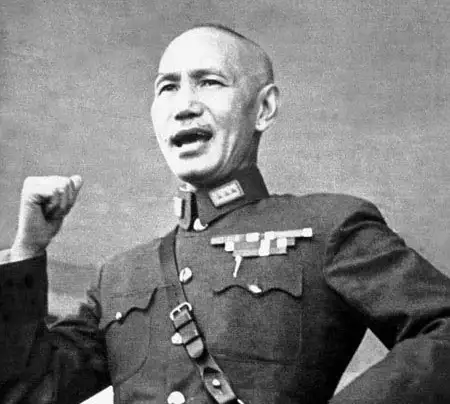
In a recent television appearance on La7, on L’aria che tira, Piergiorgio Odifreddi, the distinguished mathematician and essayist, made a comparison I had never heard before, that between Taiwan and the Republic of Salò. Knowing full well that the West would not look favourably on the reunification of the island within the People’s Republic of China, he polemically asked what one would think of a Fascist Republic of Salò still independent, alongside the Italian Republic. Perhaps the comparison would work better by imagining a hypothetical Republic of Salò set up on an island, for instance in the less accessible Sardinia, but the sense of the provocation does not change. Odifreddi, as is known, is a bearer of what is called uncomfortable intelligence, which in my humble opinion is in any case always more fruitful than the inert sharing of widespread opinions, often softly hypocritical. European politicians appeal obsessively to international law, which they set against Russia’s power politics towards Ukraine, but they refuse to accept what is nonetheless obvious: that international law lives solely at the price of a reasonable negotiation with Realpolitik. The UN, as the principal body conveying the value of international law, rests on the anomaly of a governing organ, the Security Council, of 11 members, 5 of whom are not elected but permanent members by right, who can veto any deliberation (USA, Russia, China, England, France). Historically the 4 victorious powers of the Second World War, in addition to France, co-opted essentially as a great colonial power, before the era of decolonization began. It is obvious that none of the 5 would have agreed to join the UN had there not been recognition of their privileged position. But who originally represented China, at the moment of the UN’s establishment in 1945? Not Mao but Chiang Kai-shek, leader of the Chinese nationalist party, who, after persecuting the Chinese communists, allied himself with them to repel the Japanese invasion, only to resume the civil war after the Japanese surrender. On the basis of the brutal balance of power it is therefore Chiang Kai-shek who sits at the UN, but after reopening hostilities with Mao’s communists (who escape annihilation with the celebrated Long March) he is defeated and in 1949 takes refuge on the island of Taiwan. Does it still make sense (even for international law…) that the master of a small island should sit on the Security Council, in place of the President of the newborn People’s Republic of China? And did it make sense (always, again, in the name of international law) that the USA and the UN waited until 1971 to expel the representative of Taiwan from the Security Council in favour of that of the People’s Republic of China?
Alas, in politics the logics of football fandom do not hold (that is, they should not hold…), according to which it is always the opponents who commit the fouls, and the fouls of our own side do not exist. Until proven otherwise, Western civilization guarantees a quality of individual and collective life that has no comparison with that found in other parts of the world, but this must not prevent us fromseeing that the Western democracies, when it serves them, do not hesitate to ally themselves even with the devil. It is sweetlyhypocritical, therefore, to say that China has no right to take back its rebel province because, in the almost 80 years that have meanwhile elapsed, a new, democratic society has formed, and that it is right to respect the self-determination of peoples. The same thing that is said for Ukraine, historically flesh of Russian flesh, but which was never said when the USA backed the army’s coup d’état in Chile, against a democratically elected government. The trouble is the arrival of Trump, who has upended things, revealing the game, somehow willing to acknowledge what European politicians do not want to concede: that the great powers cannot accept that dogs should bark too close to their own borders. The expression is that of Pope Francis, who at the beginning of the invasion of Ukraine said precisely that “NATO had barked at Russia’s gates”…
(2 June 2026)


